What Color is your Heart?
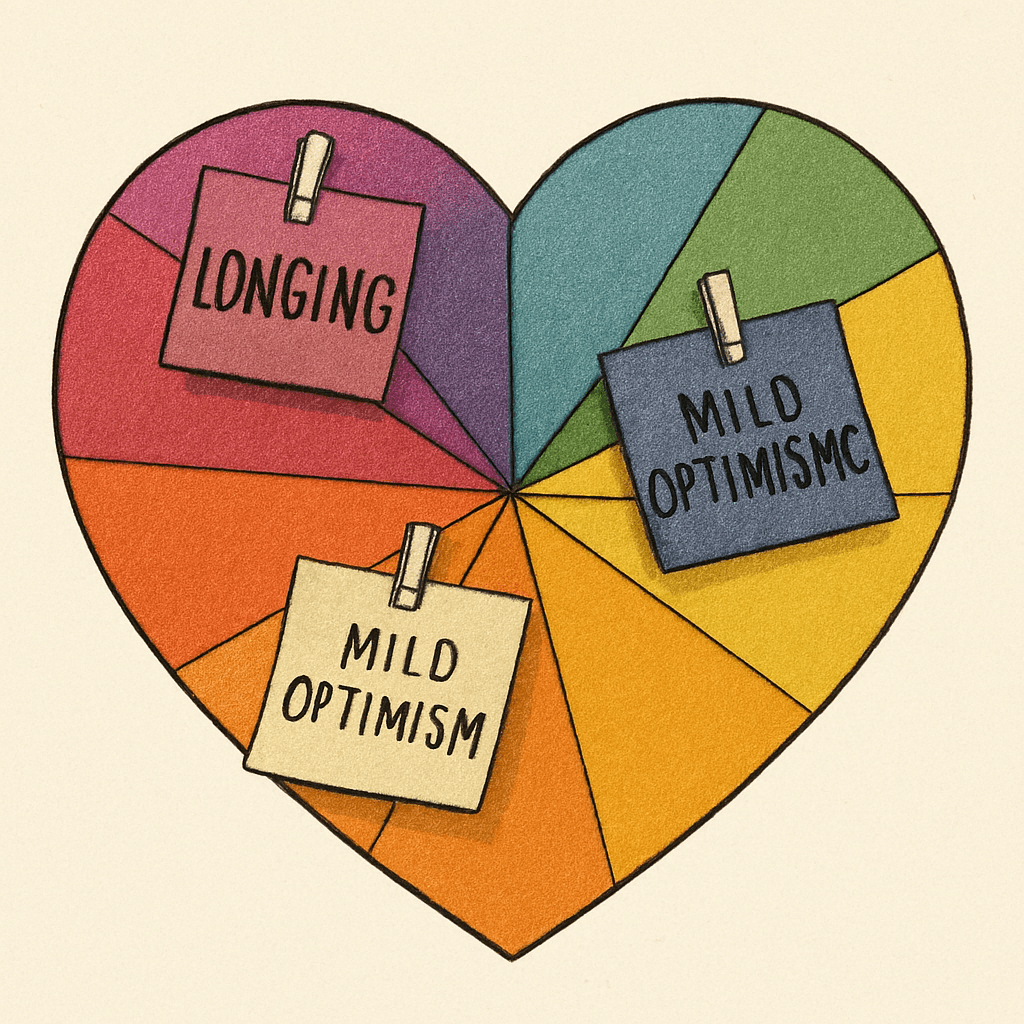
ColorQuiz reads your moods like laundry labels—sorting chaos by hue, tone, and a splash of psychic flair. It’s emotional diagnostics with a color wheel and a wink, pressed and ready for your inner wardrobe.
ColorQuiz doesn’t ask how you feel. It asks which hue feels you.
It doesn’t interpret your emotions — it dry-cleans them, folds them into spectral origami, and leaves them on the doorstep with a note: “We found your unresolved longing in the sleeve.”
Ever since I first met Herr Luscher in paperback (1980, spine cracked, cards shuffled like tarot for the rationally deluded), this test has pinned me like a butterfly with commitment issues.
It names my evasions.
It charts my misplaced priorities.
It gently discredits the alibi I gave my own heart.
It even tried to iron my shirts. (Ok, maybe not literally. But metaphorically? Crisp.)
Years of testing.
Years of watching my psyche rearrange itself into palettes.
Biases? Sure. Theories? Plenty. But the results?
Uncomfortably accurate.
Like being psychoanalyzed by a color wheel with boundary issues.
I used to flip the cards. Now I click the link.
Same ritual, less papercuts.
If you want to know where your heart is hiding — not yesterday, not in theory, but right now, in full chromatic confession – find it it here.
Just remember:
Pick the color you have the most empathy for.
Not the one you like.
Not the one that matches your curtains.
The one that stares back.
So that’s a lot of years of testing; albeit potentially biased by any number of theories.
I used the book and cards until this site came along. From then on, I always took it online. Very convenient if you want to hang on to the results.
So if you want to know where your heart is at, right now, right at this very moment…
This will tell you: Luscher at ColorQuiz.com.
Remember:Pick the colo[u]r you have the MOST empathy for; the colour you LEAST dislike. Ok

Harry is a recovering satirist, part-time philosopher, and metadata tinkerer. His archive spans two decades of metaphysical mischief, theological punchlines, and poetic nonsense. He believes in satire’s transformative power, the elegance of expressive metadata, and recursion—once writing a poem that never ended and a script that crashed browsers.





Reflective, lightly humorous, and rooted in personal ritual and psychological curiosity.